The internet is still mourning the loss of one of its most beloved indie platforms. Cohost, the ad-free, algorithm-free microblogging platform that became a sanctuary for artists, writers, and marginalized communities, officially shut its doors in January 2025.
Run by a small team called "anti-software software club", the platform struggled with funding and ultimately had to close down. While the Archive Team successfully managed to archive much of the site before the final switch-off on January 12th, the vibrant community that lived there was scattered to the winds.
For the thousands of creators who poured their hearts into building an audience there, the closure was devastating. It was the "Twitter migration" trauma all over again.
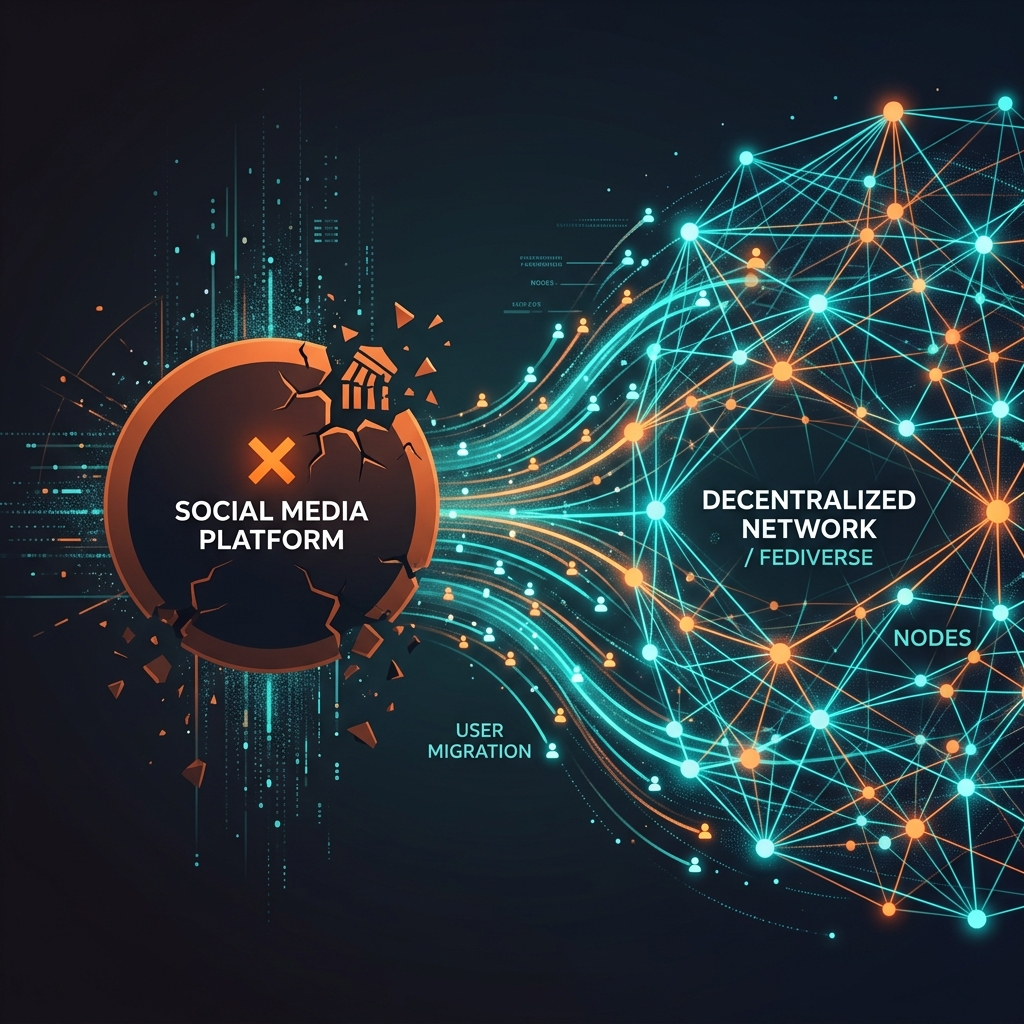
But this cycle of building an audience, only to lose it when the platform runs out of runway, doesn't have to be permanent. The Open Web offers a fundamentally different architecture—one where you, not a startup, own your connection to your followers.
Why Indie Platforms Keep Failing
The truth about hosting a massive social network is that it is astronomically expensive. Server costs, content moderation, and bandwidth scale linearly with user growth. When a platform like Cohost promises to never run ads and never sell user data, they rely entirely on user subscriptions (Cohost Plus) to keep the lights on.
Unfortunately, as we've seen time and time again, the math rarely works out. A small percentage of paying users cannot subsidize the infrastructure required for hundreds of thousands of free users.
When the money runs out, the platform dies, and your audience vanishes with it.
The Open Web: A Permanent Solution
Instead of migrating to yet another centralized indie platform (which may face the exact same financial realities in three years), creators are increasingly turning to the Open Web—a decentralized ecosystem of social platforms powered by open protocols like ActivityPub (the Fediverse), ATProto (the ATmosphere), and Nostr.
Here is why the Open Web is the only permanent solution:
1. You Own Your Audience (Portability)
If you build an audience on a Mastodon or Sharkey server, and that server decides to shut down, you don't lose your followers. The protocol allows you to seamlessly transfer your entire account—including your followers and following lists—to a new server with a click of a button. It's like porting your phone number to a new carrier.
2. Distributed Costs
Because the network is split across thousands of independent servers, the astronomical server costs are distributed. A small community server of 500 artists only has to pay for the bandwidth of those 500 artists, making it infinitely more sustainable than one company trying to host 5 million people.
3. Diverse Ecosystems, Infinite Choices
You don't all have to use the same app or even the same underlying protocol.
- Mastodon is great for standard microblogging.
- Pixelfed is an Instagram alternative perfect for visual artists.
- Sharkey (Misskey fork) offers a richer, more Tumblr-esque experience with custom emojis and longer posts.
- Bluesky & Spark are excellent options built on the AT Protocol (ATmosphere).
- surf.social is a great web client that has built-in support for both Mastodon and Bluesky simultaneously.
- Nostr offers a censorship-resistant, cryptographically secure alternative that is incredibly resilient, and ditto.pub is a great platform to onboard new members.
- WordPress & Ghost can be federated via ActivityPub so your long-form blog posts go straight into your followers' social feeds.
The best part? Thanks to open standards and innovative cross-network clients like surf.social, you aren't locked into a single walled garden. You have the freedom to choose the platform and protocol that best fits your creative needs without sacrificing your independence.
How to Rebuild After the Shutdown
If you lost your audience when Cohost went offline, now is the time to set up a permanent lifeboat.
- Find a Home: Look for community-run instances on Mastodon or Sharkey, join Bluesky on the ATmosphere, or generate your own keys on Nostr via ditto.pub.
- Re-establish Connections: Search for your old Cohost mutuals using their new Open Web handles. Many users appended their fediverse links in their final Cohost posts before the site went read-only.
- Register Your Business: If you are an independent seller, artist, or freelancer, make sure your new decentralized handle is highly visible. Register your profile on the Open Social Directory to ensure your clients and fans can always find your services, no matter which server you choose to call home.
The era of "renting" your audience from Silicon Valley startups is ending. By migrating to the Open Web, you ensure that the community you build today will still be yours tomorrow.
Sources and References
- Cohost Announcement: The Archive Team Project for Cohost Pages
- Anti-software Software Club: Cohost Closure Notice and Financial Disclosures
- Fediverse Directory: Official Mastodon Community Server List


Comments
Loading comments from the Open Web...