It usually happens on a Tuesday.
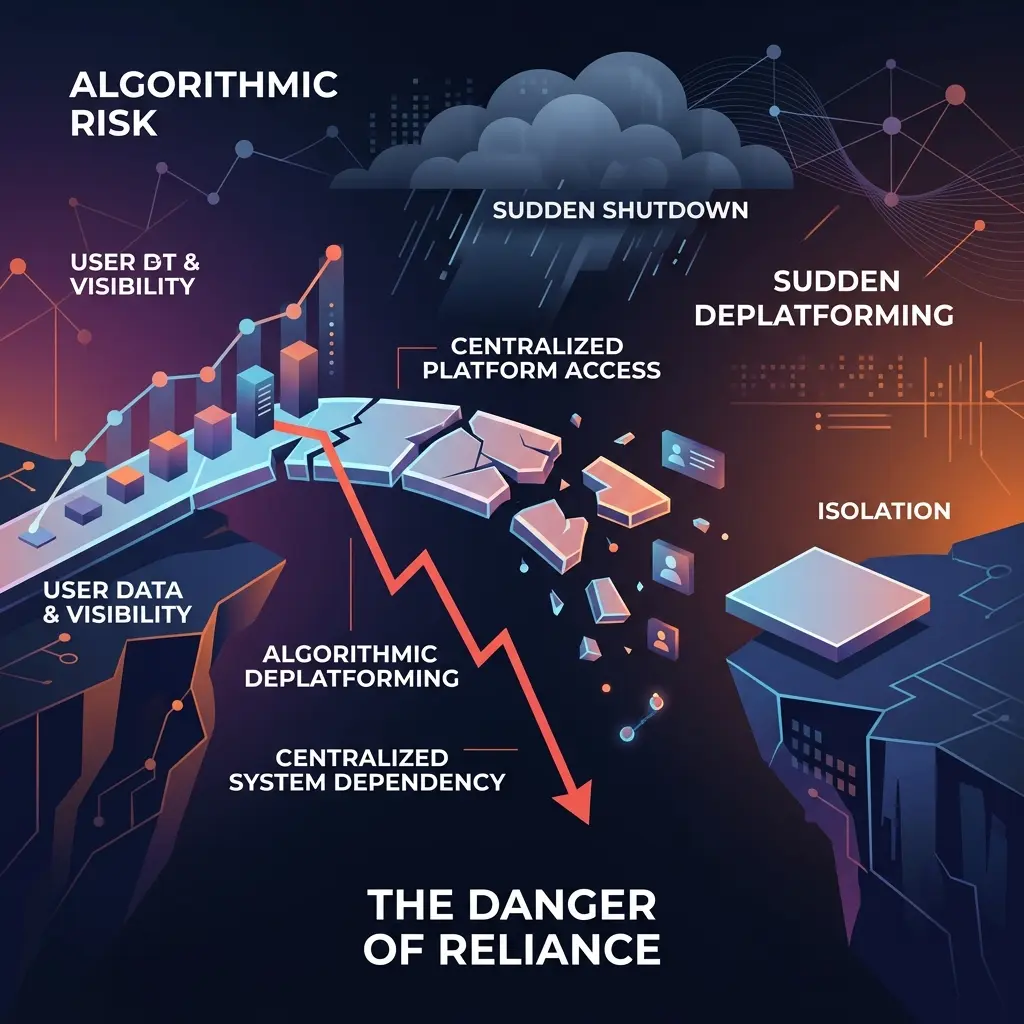
A business or creator that has spent three years and hundreds of thousands of dollars building a massive audience on a centralized platform wakes up to a generic email notification: "Your account has been restricted due to a violation of our community guidelines."
No specific post is cited. No explanation is offered. There is no telephone number or direct email address to contact. Just a dead link where a thriving customer base and years of hard work used to be.
This is not a hypothetical scenario. It is a recurring crisis for independent digital creators, small businesses, and massive publications alike. We call it The Great Deplatforming, and it represents the single largest operational risk to modern digital businesses today.
The Illusion of Ownership
When you build an audience on a traditional, centralized social network, you are operating under a fundamental illusion. You believe that your follower count represents a list of people you have won the right to reach.
In reality, your follower count represents a list of people the platform might allow you to reach, if they determine it is profitable for them to do so.
Case Study: The "Pivot to Video" Bloodbath
Consider the notorious "Pivot to Video" era of the late 2010s. Facebook heavily incentivized publishers to create short-form video content, providing inflated metrics to make the medium look incredibly lucrative. Media companies fired their writers, shut down written content, hired video production teams, and restructured their entire business models to appease the algorithm.
Then, Facebook changed their minds. The algorithm was tweaked. Organic reach for videos plummeted, and dozens of digital media companies went bankrupt or had to execute massive layoffs overnight. They didn't lose their audience because their content got worse; they lost their audience because a single company decided to change the rules of the game to maximize their own ad revenue.
Soft Deplatforming: Algorithmic Suppression
You don't need to be outright banned to be deplatformed. Soft deplatforming—where your organic reach is intentionally throttled by the platform's proprietary algorithms—is far more common and financially damaging:
- Link Suppression: Traditional networks actively suppress posts that contain external links. The platform's goal is to keep users on their site to show them ads, so their algorithms penalize any post directing traffic to your independent store or website.
- Pay-to-Play Boosting: If you want your own followers to see your post, you must "boost" it with ad spend. You are effectively paying a monthly tax to communicate with the audience you already built.
- Shadowbanning: Your content is silently hidden from searches and timelines without any notification or recourse. Creators can spend months posting into a void, completely unaware that their reach has been artificially throttled.
When you rent space on a centralized platform, your business model is entirely at the mercy of their quarterly corporate earnings reports.
The Federated Antidote: True Data Resilience
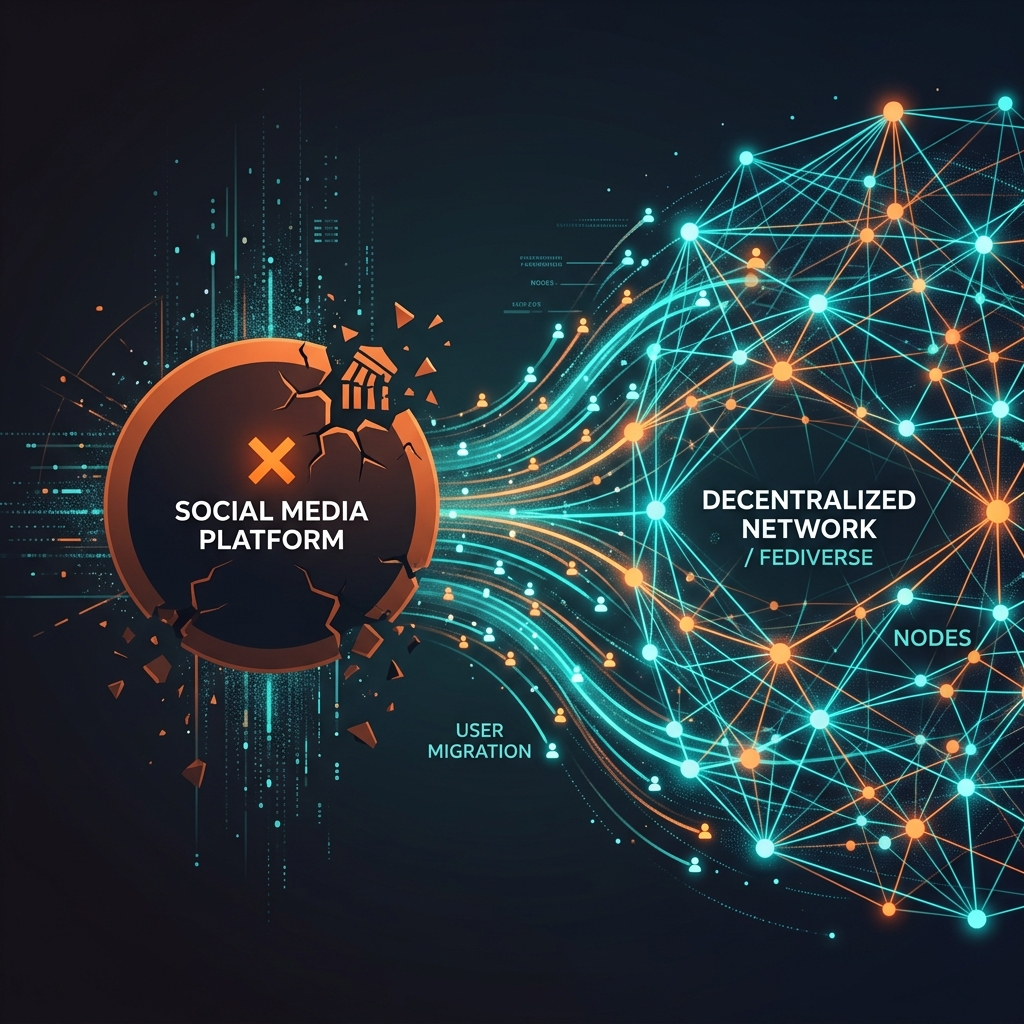
The Open Web provides the only structural, protocol-level defense against algorithmic risk. When you establish your presence on open protocols like ActivityPub (Mastodon), the AT Protocol (Bluesky), or Nostr, you take true ownership of your digital identity.
This resilience is built on three pillars:
1. Cryptographic Identity
On Nostr and the AT Protocol, your account is represented by a cryptographic public/private keypair rather than an entry in a corporate database. If your hosting server goes rogue, closes down, or censors your content, you simply use your private key to connect to a new relay or server. Your followers verify your identity cryptographically—no central company can take your handle away.
2. Multi-homing and Redundancy
Because open protocols are interoperable, you can publish content once and syndicate it across multiple decentralized networks. By using standard RSS feeds, activity feeds, and cross-posting bridges, your audience remains connected to you even if one network experiences a temporary disruption.
3. Chronological Timelines
There is no central algorithm to suppress your links or demand advertising dollars to reach your followers. Timelines are chronological. If someone follows you, they see your updates. It is the digital equivalent of owning your own email database, but with the discovery mechanics of social networks.
Mitigating Your Platform Risk Today
If you are a business owner relying on a single centralized platform for your primary lead generation or customer communication, you are sitting on a powder keg. Diversifying your presence onto the Open Web isn't just about exploring new technology; it is a fundamental risk management strategy:
- Register Your Custom Domain: Link your social handle to your own domain (e.g.
yourname.com). - Build an Independent Email List: Keep a backup database of your subscribers on an open-source platform.
- Establish Federated Touchpoints: Build active profiles on Mastodon and Bluesky to ensure your audience has an alternative way to reach you.
Claim your verified listing on the Open Social Business Directory today to establish your permanent, un-deplatformable presence on the Open Web.
Sources and References
- Columbia Journalism Review: The Facebook 'Pivot to Video' Metric Inflation Scandal
- W3C Recommendation: ActivityPub Core Protocol Specifications
- AT Protocol Specs: Account Portability and Identity Architecture

Comments
Loading comments from the Open Web...